


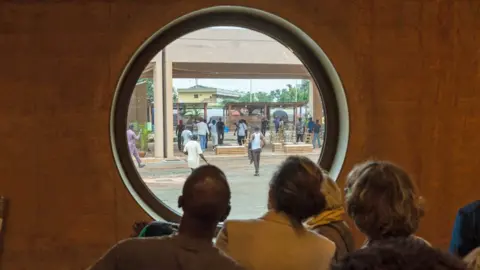
The nation's impressive new West African Art Museum (Mowaa) has found itself in the crosshairs of local power politics during the time it was expected to – but did not manage – to welcome visitors to the public for the initial occasion.
The Ambitious Project
The 15-acre facility is located in the heart of the Edo state capital, administrative center of the southern region of Edo – and features an archaeological dig and structures planned by high-profile dual heritage architect Sir David Adjaye, particularly noted for the Washington African American Museum that was inaugurated in Washington in 2016.
It has been half a decade in the creation – and is designed to celebrate both the past and the modern times of creativity in the area known for the cultural artifacts, cultural objects looted from the king's palace by British troops in the 19th Century.
Readiness and Potential
It is impressive – and prior to the planned opening, Mowaa was active with workers resolved to show it is a place that can compete with well-known art institutions in the Western world.
Internally preservation experts precisely revealed artworks from protective packaging, examining each piece and taking detailed documentation before positioning them on walls and stands.
Experts adjusted climate control systems. In the scientific facility, staff members calibrated devices designed to preserve historical artefacts.
Financial Backing and Economic Vision
The venture has been the concept of investor Phillip Ihenacho – now Mowaa's executive director.
"I want us to have a substantial economic impact on area populations around here," he told the press, adding that he aspired to make Benin City "a tourism center."
Mowaa, a not-for-profit national foundation, aims at generating in excess of 30,000 work positions and adding over $80m per year to the regional creative economy through partnerships and activities.
Funding Sources and Political Challenges
It has taken $25m to get here – money gathered from various donors, including the international partners, the UK museum and the Edo state government.
But at present the regional administration has pulled the rug from below it – revoking the use of the land on which the building was erected.
An government communicator clarified this was because in the original paperwork it had identified as Edo Museum of West African Art – and it had since removed "the state identifier" from its designation.
Unrest and Official Response
This announcement followed demonstrations on Sunday, when activists invaded the facility calling for it be called the Museum of the Benin Kingdom.
A disruptive assembly harassed overseas dignitaries at the museum prior to the inauguration – requiring them to be quickly removed under security protection.
National leader Bola Tinubu has additionally become involved to try and resolve the tensions, creating a presidential committee to address the controversy.
Governance Issues
But why has this become so politicised – and such a reputation problem?
Much of it results from local power struggles at a area administrative level, as it was the ex-administrator Godwin Obaseki – whose governance ended the previous year – who was a key supporter of the project.
And it looks like the administration of the recently elected official, a key associate of the regional monarch, known as the traditional leader, may want more of a stake in the initiative. The activists on the weekend, for case, were demanding that the museum be positioned under the control of the current Oba.
The Historical Objects Discussion
This highlights the controversial matter of the Benin Bronzes, one of the continent's most celebrated cultural treasures.
Because even if the institution does ultimately open, these artifacts will be conspicuously absent.
They are metal, ivory and timber sculptures that once decorated the royal palace of the historical empire before colonial troops took them in the colonial era during a punitive expedition.
Nowadays, numerous continue to be spread across galleries in the West -- such as the British Museum, European center and the Metropolitan Museum of Art.
Restitution Efforts
Their return has become one of the most debated debates in the worldwide cultural sector. Approximately 150 have currently been returned – and additional are due to follow.
When ideas for the museum in the urban center were first announced in recent years, the movers and shakers on the national arts community hoped it would become their perfect venue – a advanced complex to show them off to the global audience.
But the waters were muddied recently after the central administration declared that the traditional ruler would be the proper guardian of returned objects – and the royal household advocated for a facility under the royal family's direct control, contrary to the wishes of the ex-leader.
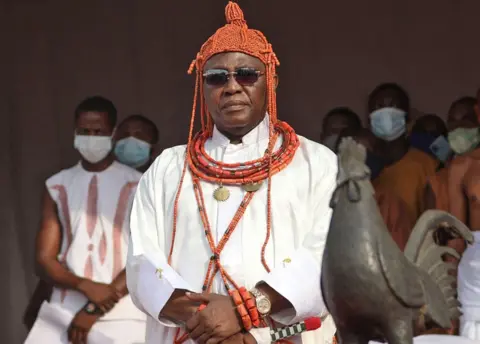
Diplomatic Challenges
This placed Mowaa in a delicate position: asserting a specific viewpoint on repatriation while staying tactful on custodianship – and stressing its larger purpose, which led to|c


